Finding 70 cm equipment for LoRa APRS
By Jon Adams N7UV
Here's a brief guide on where to find hardware that will work fine for 70 cm LoRa APRS. All the deployments I know of or have actually implemented require 4 things - a radio, a good 70 cm (434 MHz) antenna, a user interface (sometimes the radio itself), and Ricardo CA2RXU's LoRa APRS firmware, which runs on the radio hardware. Ricardo's github site is at https://github.com/richonguzman
[An aside: Semtech (the inventor of and manufacturer of LoRa chips) has been actively improving the LoRa technology. Tens of millions of chips are now in the electric, gas, and water utility market allowing remote meter reading, among other Internet of Things (IoT) stuff! The Semtech SX127x family of chips is the 1st generation. They're fine, the output power is no greater than +20 dBm, and the receiver's Channel Activity Detector (CAD) mechanism appears to only detect the preamble of a packet as it's transmitted over the air, not the payload itself. The 2nd and later generations (SX126x and others) put out +22 dBm, and have a superior CAD mechanism. A question I haven't been able to get an answer to is whether the firmware that's available uses the CAD feature as a sort of carrier squelch multiple access (CSMA) mechanism. There is a bunch of research on how to improve channel capacity through using the CAD mechanism in some clever ways.]
FIRMWARE
Our local network has been innovating faster than most others, and sometimes Ricardo's firmware hasn't got all the features that our network needs (SF7, 6, and 5 support, beacons every 10 minutes, tactical callsigns, much faster digipeating, etc.). We've been working on a branch of his stuff, so if/when you pull together a build of your own, let me know and we'll see whether your setup will need to use the branch.
RADIOS
There are multiple manufacturers of radio gear for 70 cm LoRa APRS. It sometimes comes down to your preferences, and certainly whether you intend to use the equipment for a fixed base station or for a mobile/portable station (with GPS). So let's divide it into stuff with GPS, and stuff without GPS.
Obviously, you can use a radio with GPS for a base station, but the way the firmware is right now, I think the GPS needs a solid GPS position to transmit. Perhaps Ricardo (CA2RXU) can update us with that. I suppose you could be like the MeshCore and Meshtastic folks who use non-GPS board for mobile purposes, but that kinda defeats the point of APRS.
The lists below include only hardware that I've purchased and used for the local network (except where noted). Ricardo CA2RXU has a much broader list of buying links here at https://github.com/richonguzman/LoRa_APRS_Tracker/wiki/1000.-Supported-Boards-and-Buying-Links - it's a hobby project, but using those buying links helps fund his work, so that's a consideration.
With GPS
A thing to mention first about GPS - there are really good GPS receivers like the uBlox. And full size (25x25 mm) GPS antennas are better than the half-size (12x25 mm) ones. And all GPS antennas need to be able to see enough satellites to get and hold a fix. The faster the fix after you apply power, the sooner you show up on the air!
LilyGO T-Beam (SX127x)LilyGO T-Beam Supreme (SX126x)
LilyGO T-Deck Plus (SX126x)
QRP-Labs Light Tracker 1.1 433MHz (XS126x) (have not used one yet)
QRP-Labs Light Tracker Plus 1.0 (SX126x) (have not used one yet)
RPC Electronics Swiss Army Knife (SAK) (SX126x) (Not yet in production, so I haven't been able to get one to play with - go Jason go!)
Several of the above boards support easily remoting the GPS antenna, so keep that in mind. The radio can go under a seat, the GPS antenna on the front or rear dashboard or outside, the 70 cm antenna outside, and you can interface to the radio via your phone.
Without GPS
LilyGO paxcounter T3 V1.6.1 (SX127x)
Heltec V3 (SX126x)
QRP-Labs LightGateway Plus (Solar) 1.0 (SX126x)
Again, check Ricardo's list of supported units since he's worked with a lot more than I have, he's adding to it all the time.
AMPLIFIER
While there are those hams in this group that like the very low transmit power / very high RF link margin that LoRa can provide, I am much more interested in building out a high performance, high availability, high speed LoRa APRS network. Our local 433 MHz LoRa APRS network runs at 4560 bps over-the-air, which is well over 4x that of the legacy 2 m APRS stuff due to a lot of overhead issues for the legacy stuff. (We may push it into the >5 kbps range soon.)
Fortunately, some of the above products already run +30 dBm or so (select QRP-Labs units and hopefully soon RPC Electronics). All the others could use an amp to get the best coverage. And there's a relatively inexpensive, high performance solution. The AB-IOT-433 (this link may not be very stable, there are a ton of vendors selling them, and they change names and prices all the time, it seems) unit is a really easy-to-use bidirectional amp that provides 11 dB transmit gain (can output over 2 watts!) and claims to have a low-noise receiver amp with <2.0 dB noise figure (the Semtech chip advertises a 6 dB NF, so this amp is at least 3-4 dB better). Here's a picture of the amp in case that link doesn't work.
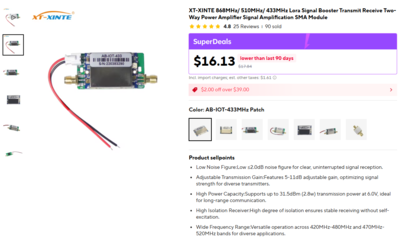
I've used both the SMA-connectored one and the "patch", where I just solder on coax pigtails and reduce the overall size of the assembly. The amp runs from 3.7 Vdc to 6.0 Vdc, with the highest output power at the 6 volt setting. What this means is that you can run it right off a 3.7 Vdc battery, or (the way I do it) use a $1-2 buck regulator and step down 12 Vdc. Buck regulators are like this one:
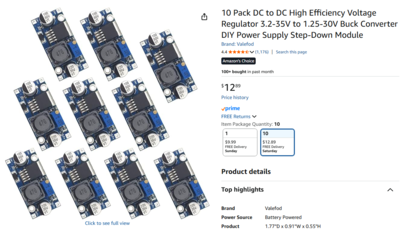
If you don't already have a drawer full of these babies, they're incredibly handy and are pretty RF quiet.
ANTENNAS
Finally, we come to antennas. On my house, I'm using a plain vanilla dual-band Diamond (or Comet?) fiberglass gain antenna. Its VSWR at 433 MHz is acceptable, but could be better. The 2 m side is running my 2 m legacy APRS station, and the 70 cm side is running a QRP-Labs LightGateway Plus (Solar) 1.0. The range is pretty impressive, even with the less than stellar VSWR.
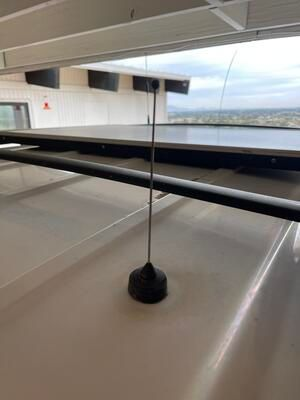
For mobile, I also tried using dual-band antennas, but I haven't found one yet that is optimized for 433 MHz, they're all tuned for the repeater band, and the VSWR is often worse than 2.5:1. That's not horrible, but it's not great either. So I use a 1/4 wave spike on a hard-mounted NMO mount. Since many people don't want to punch holes in the roof of their vehicle, this is a fine (VSWR around 1.2:1) antenna.
https://www.amazon.com/dp/B08CRSZXDB
The mag mount that I use for that is here
https://www.amazon.com/dp/B073QHDRK6
Strong magnet, won't blow off at high highway speeds.
CONNECTIVITY (Bluetooth and Wi-Fi)
Where would we be without these miracles? The Dark Ages, likely %^) Most or all the devices I've listed also have Bluetooth (LE or regular) and 2.4 GHz Wi-Fi built-in. The way Ricardo's firmware is set up allows you to either connect the radio to your home network (IGate/digipeater firmware) or use Wi-Fi to set up the parameters and then use something like aprs.fi app or aprsdroid (I don't have an Android device, so I don't know) to actually set up the device, monitor tx/rx, send/receive messages, etc.
WHAT'S JON'S SETUP?
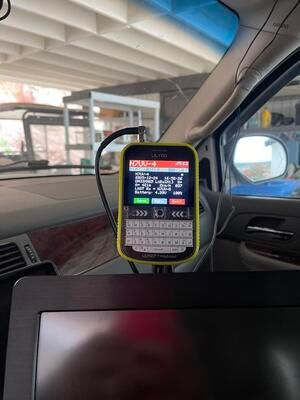
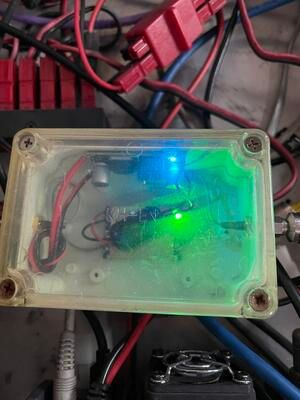
In the truck, I like the T-Deck Plus. It has a big screen (with way too much redundant information), it has Bluetooth and Wi-Fi built in, it has a keyboard, it puts out +22 dBm natively (SX1262 chip inside), it has GPS, and a good sized battery. I have a 1/4 wave whip I can throw on it when I take it out of the truck to go on a hike. I have a 1 watt amp (the unit above) under the seat. The antenna is a 1/4 wave spike on an NMO mount. Oh, I can use my iPhone via Bluetooth to talk to the radio and send/receive messages. It's not a perfect setup, but it's pretty serviceable. T-Deck
Amplifier
Antenna
IN SUMMARY
I hope this has been a helpful guide as to where to find 433 MHz LoRa radio gear, and all the options you might have! It's easy to put together a base or mobile station for not much money.
--Cheers and 73 - Jon N7UV